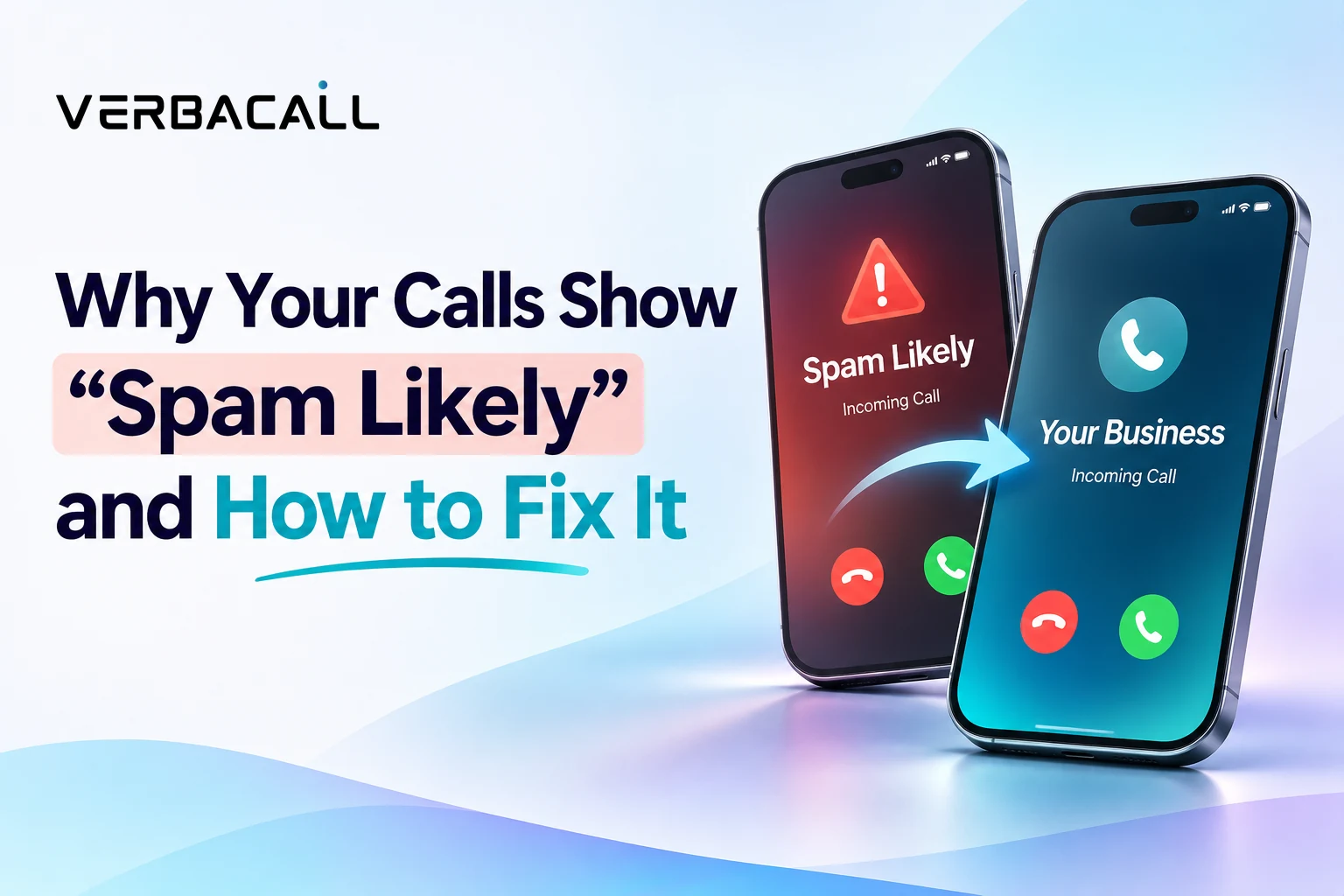
Why Your Calls Show "Spam Likely" and How to Fix It
Spam labels come from call-reputation providers that watch how a number behaves. Learn what triggers a label and how registering your numbers helps.
On this page
- Key takeaways
- Who decides that a call is spam?
- What triggers a label?
- What is STIR/SHAKEN?
- How do you fix a labeled number?
- Which calling habits keep numbers clean?
- Why does consent help with labels?
- What changes when an AI agent is making the calls?
- How do you keep watch afterward?
- Frequently asked questions
- Sources
Quick answer: Calls show “Spam Likely” when a call-reputation provider decides a number’s behavior resembles unwanted calling. The label is based on signals such as call volume, short calls, low answer rates, and consumer reports. To fix it, register your numbers with the Free Caller Registry, set an accurate caller name, ask your phone provider about attestation, and call only people who expect to hear from you.
Key takeaways
- Labels are set by reputation providers such as First Orion, Hiya, and TNS, working with carriers and device makers. (SignalWire documentation)
- Signals include number history, call patterns, spam reports, the caller name record, and attestation level. (SignalWire documentation)
- The Free Caller Registry sends your details to all three providers at no cost, though it does not guarantee a label will be removed. (Free Caller Registry)
- Rotating through pools of numbers is itself a warning sign. Changing how you call works better than changing numbers. (SignalWire documentation)
Who decides that a call is spam?
A layer of companies most callers never see. Phone carriers and device makers rely on call-reputation providers to score incoming calls, and those scores produce labels such as “Spam Likely” and “Scam Likely.” (SignalWire documentation)
First Orion, Hiya, and TNS are the three providers behind the industry’s shared registration site. (Free Caller Registry) Each one runs its own analysis. A number can be clean with one and flagged by another, which is why the same call shows a warning on one phone and a normal caller ID on the next.
The label comes from patterns in how a number behaves. It is not a verdict on your business by a person.
What triggers a label?
Five kinds of signal trigger a label, according to one phone platform’s documentation. (SignalWire documentation)
| Signal | What it means in practice |
|---|---|
| Number history | A number can carry a reputation from whoever used it before you |
| Call patterns | Call volume and length, and how often calls are answered |
| Spam reports | People tapping “report” or blocking the number |
| Caller name record | A missing or generic name |
| Attestation level | How firmly your provider has vouched for your right to use the number |
Call patterns matter because they are what spam looks like from the outside. Many calls in a short time, most of them unanswered or ended within seconds, resembles a robocaller regardless of who is dialing.
What is STIR/SHAKEN?
STIR/SHAKEN A caller ID authentication framework. The originating phone company digitally signs each call to confirm the number has not been faked, and other carriers validate that signature before the call reaches the recipient. (Federal Communications Commission)
Signatures come at three levels, labeled A, B, and C. Level A is the strongest. It means your provider knows who you are and has confirmed you are authorized to use the number. (SignalWire documentation)
Authentication answers one question: is this caller ID real? It does not say whether the call is wanted. That second judgment belongs to the reputation providers, so a fully authenticated number can still be labeled.
VerbaCall calls leads within about 20 seconds of an inquiry, when they are expecting to hear from you. Hear a live call
How do you fix a labeled number?
Work through six steps in order. The early ones are quick, and the last one decides whether the fix holds.
- See what recipients see Call phones on different carriers from the affected number and note which ones show a label.
- Register with the Free Caller Registry One free submission goes to all three providers. You provide your business details and numbers, along with the purpose of your calls. (Free Caller Registry)
- Set your caller name The name is limited to 15 characters and can take up to 48 hours to update. Use your business name, and avoid generic words such as “Support.” (SignalWire documentation)
- Ask about attestation Find out what level your calls are signed at, and what your provider needs from you to reach level A.
- Contact providers directly if needed Each reputation provider has its own form for disputing a label. (SignalWire documentation)
- Change the pattern Registration will not hold if the behavior that caused the label continues.
The registry has limits worth knowing. Only a business calling on its own behalf may register, and resubmitting the same number adds nothing. (Free Caller Registry)
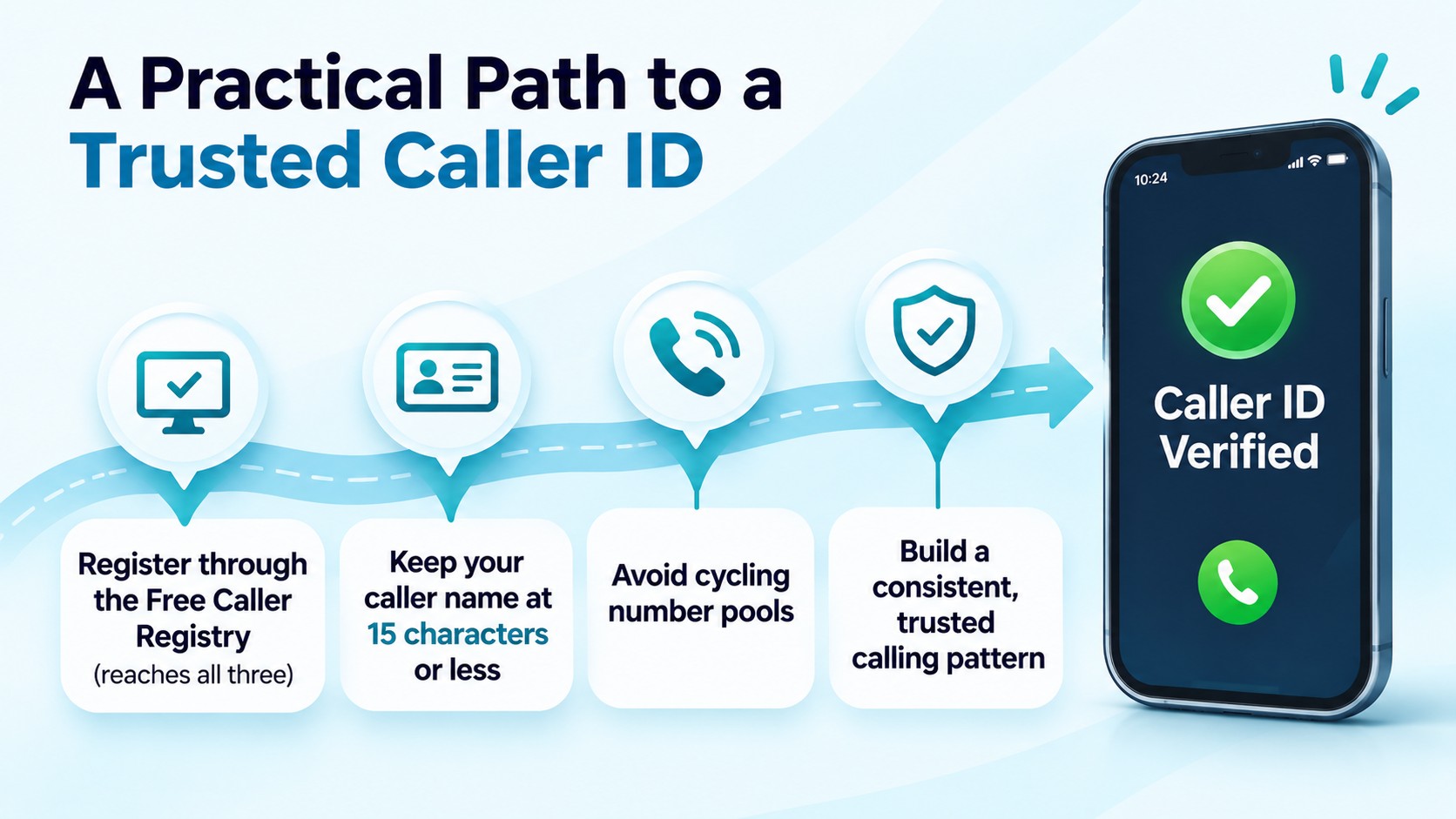
Fixing a Spam Likely label is mostly about how you call, not which number you use.
Which calling habits keep numbers clean?
The ones that make your calls look like what they are. The same documentation lists what to do and what to avoid. (SignalWire documentation)
Do
- Call people who expect the call or have consented to it
- Increase volume gradually on a new number
- Use the same caller ID consistently
- Watch answer rates and complaints by number
Avoid
- High volume from a newly assigned number
- Repeated redials in a short period
- Very short or abandoned calls
- Calling outside reasonable local hours
One more item belongs on the Avoid list: failing to identify your business at the start of the call. (SignalWire documentation) A recipient who hears a clear name is less likely to hang up and report the number.
Why does consent help with labels?
Because it changes the numbers that reputation systems watch. A person who filled out a form a minute ago is likely to answer and to stay on the line. A person on a purchased list is more likely to hang up or report the call.
Answer rates and call length are part of the pattern providers examine. (SignalWire documentation) Teams that call only recent, consented inquiries are sending the signals of a wanted caller. Our follow-up cadence guide shows how to space repeat attempts so they do not look like redialing.
Start with calls people expect Start a free trial with 30 minutes of call time, and point it at fresh inquiries only. Start a free trial
What changes when an AI agent is making the calls?
Volume becomes easy, which makes discipline more important. An AI agent can place far more calls in a day than a person can. Aimed at an old, unconsented list, that is a fast way to burn a number.
Aimed well, it helps. An AI agent calls within seconds of an inquiry and states the business name every time. It also keeps to the hours you set. Those are the habits on the Do list above.
When you roll one out, ramp up gradually instead of starting at full volume. Our 30-day rollout plan builds that in.
How do you keep watch afterward?
Track answer rate for each number, week by week. A sudden drop on one number while the others hold steady is the usual first sign of a new label.
Place test calls to phones on several carriers once a month. Keep a record of any complaints, with the recording, so you can see what the caller objected to.
Texts are judged by a different system. If your messages are not arriving, the cause is more likely registration, which our 10DLC guide explains.
Be the call they wanted Try VerbaCall free with 30 minutes of call time, or book a demo to hear how the agent introduces your business. Book a demo or Try for free
This article is general information, not legal advice. Rules change and vary by state. Confirm your obligations with qualified counsel before you launch a campaign.
Frequently asked questions
Why does my business number show as “Spam Likely”?
A reputation provider has scored the number as risky. Common reasons are a burst of calls from a new number, many short or unanswered calls, complaints from people who received them, or a history the number inherited from a previous owner. (SignalWire documentation)
How do I remove a spam label?
Register the number with the Free Caller Registry and set a clear caller name. Ask your phone provider about your attestation level. Then fix the calling pattern that caused the label. If it persists, contact the reputation providers through their own request forms. (SignalWire documentation)
Does registering guarantee the label goes away?
- The Free Caller Registry says that registration does not guarantee redress, because each provider makes its own analysis. (Free Caller Registry) Registration tells them who you are. Your calling behavior still has to support it.
Does STIR/SHAKEN stop spam labels?
Not by itself. STIR/SHAKEN confirms that a caller ID has not been faked. (Federal Communications Commission) A properly authenticated number can still be labeled if its calling pattern looks like spam. Attestation is one signal among several. (SignalWire documentation)
Should I just buy new phone numbers?
That tends to backfire. Cycling through large pools of numbers to reach the same people is one of the behaviors providers look for, and new numbers need a gradual ramp-up. (SignalWire documentation)
Sources
- SignalWire documentation, accessed November 2026. Resolving spam labels
- Free Caller Registry. Free Caller Registry
- Federal Communications Commission. Combating Spoofed Robocalls with Caller ID Authentication
About VerbaCall. VerbaCall is an AI voice agent platform. It calls new leads within about 20 seconds, answers inbound calls at any hour, books appointments, and warm-transfers ready callers to your team. Each conversation is written back to your CRM, with text and email follow-up alongside. It is built on Twilio and serves US businesses in real estate, senior living, home care, healthcare, and restaurants. See how VerbaCall works.