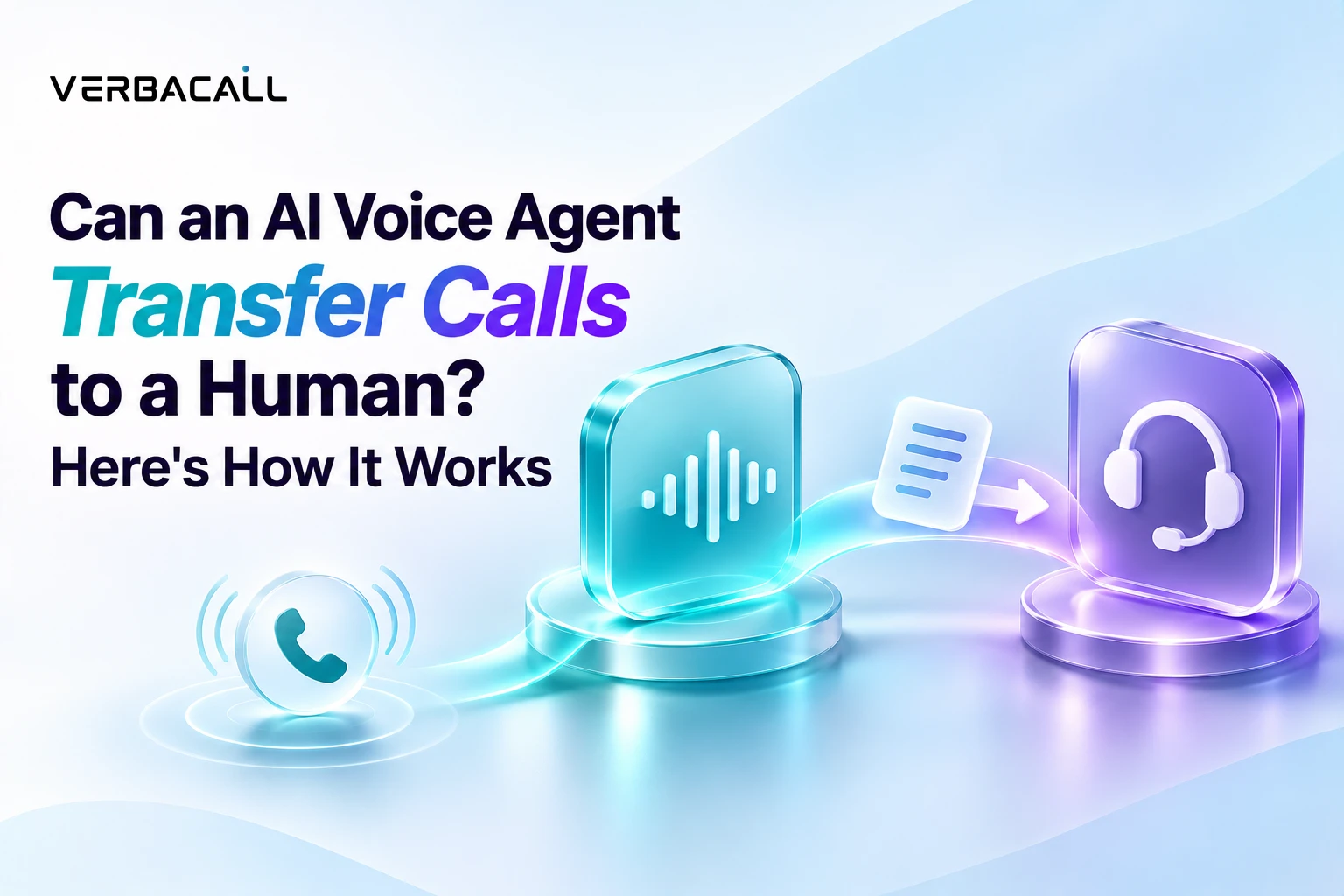
Can an AI Voice Agent Transfer Calls to a Human? Here's How It Works
Learn how AI warm transfers connect callers to human agents, share call details, and improve customer service with VerbaCall.
On this page
Meta description: Learn how AI warm transfers work, when calls need human help, and how AI voice agents like VerbaCall support customer conversations.
Your AI voice agent answers a call, helps the customer, and collects the details. Then the caller asks to speak with a real person.
Can the AI bring someone from your team into the conversation?
Yes. Modern AI voice agents can transfer calls to human employees, often while sharing the information they’ve already collected.
This is known as an AI warm transfer. It helps businesses handle routine calls with AI while giving customers access to a real person when needed.
What Is an AI Warm Transfer?
There are three common ways an AI agent can pass a conversation to your team:
-
Cold transfer: The AI sends the caller to another number without first briefing the employee.
-
Warm transfer: The AI collects details, briefs an employee, and connects the caller once the employee accepts.
-
Human handoff: The broader process of moving a conversation from AI to a person, either live or through follow-up.
Think of a warm transfer as a receptionist who tells your employee why someone is calling before putting them through.
How Does an AI Warm Transfer Work?
The process usually follows four steps:
-
Answer: The AI greets the customer and learns why they’re calling.
-
Qualify: It collects useful details, such as their needs, budget, or preferred appointment time.
-
Brief: The AI contacts the right employee and shares the key information.
-
Connect: Once the employee accepts, the customer joins the conversation.
VerbaCall supports this type of warm handoff, including holding the caller while the receiving employee is briefed.
A Practical Example: A Real Estate Buyer Calls
A buyer calls a real estate office looking for a three-bedroom home under $450,000.
The AI agent collects their budget, preferred location, and moving timeline. When the buyer wants to speak with a realtor, the AI passes those details along.
The realtor can then discuss suitable properties and arrange a viewing instead of starting with basic questions.
The benefit is simple: the AI handles the first part of the call, while the realtor focuses on helping the buyer make a decision.
This is an illustrative example, not a published customer result.
How Do Other AI Voice Agents Handle Transfers?
Several AI voice platforms offer human handoffs, although the way they manage them can differ.
| AI voice service | How its transfer works |
| Retell AI | Offers cold, warm, and agentic warm transfers, including a second AI that can check whether an employee is ready. |
| Synthflow | Supports warm transfers with a short message or AI-generated summary before connecting the caller. |
| Bland AI | Uses a second AI agent to brief the employee before joining the calls. |
| VerbaCall | Briefs the employee, waits for acceptance, and connects the caller. It also supports CRM updates and appointment booking when nobody is available. |
The main difference for business owners is how each service fits into their daily work. VerbaCall combines warm transfers with lead qualification, scheduling, and CRM integration, so the information collected during a call can also support future follow-ups.
When Should AI Bring in a Human?
AI can handle many everyday questions, but certain conversations benefit from a person’s experience.
Common reasons to transfer include:
-
Ready-to-buy customers: Connect interested buyers with your sales team.
-
Complex questions: Route callers to someone with the right knowledge.
-
Complaints: Let an employee address the customer’s concerns.
-
Requests for a person: Give callers the choice to speak with your team.
Businesses can set rules for these situations rather than deciding what to do during every call.
What If Nobody Answers?
Your employees may be busy, meeting customers, or finished for the day.
Instead of ending the conversation, an AI agent can offer another next step.
For example, VerbaCall can:
-
Take a message and save the caller’s details.
-
Schedule an appointment.
-
Update the CRM for follow-up.
These options help keep customer inquiries organized until an employee becomes available.
How to Get Warm Transfers Right
Before using AI call transfers, make sure your team has a simple plan.
-
Choose the right person: Send each call to someone who can help.
-
Collect useful details: Ask only what the employee needs to know.
-
Keep the briefing short: Share the caller’s request and key information.
-
Plan for busy employees: Set up messages or appointments as backup options.
-
Check the results: Track completed transfers, wait times, and customer feedback.
For instance, if 90 out of 100 attempted transfers reach an employee, your transfer completion rate is 90%. Reviewing this number over time can help identify where the process needs improvement.
The Bottom Line
AI voice agents can do more than answer phones. They can also recognize when a customer needs human help and bring the right employee into the conversation.
Services like Retell AI, Synthflow, and Bland AI offer different ways to make these handoffs work. VerbaCall brings warm transfers together with lead qualification, CRM updates, and scheduling in one workflow.
The goal is to let AI handle the first steps while your employees focus on conversations where they add the most value.
Explore ++VerbaCall++ to learn how AI and your team can work together.