AI vs. Chatbot: What's the Difference and Which Does Your Business Need?
AI vs. chatbot: Compare features, costs, customer support, and lead management to find the right solution for your business.
On this page
Your customers want quick answers. Your team wants fewer repeat questions. And your business needs to keep things moving without adding more work.
That’s why many businesses use chatbots. But newer AI tools can do much more than answer common questions.
So, when comparing AI vs. chatbot, which one makes more sense for your business?
The answer depends on what you want to get done, how your customers reach you, and how much help they need.
AI vs. Chatbot: What’s the Difference?
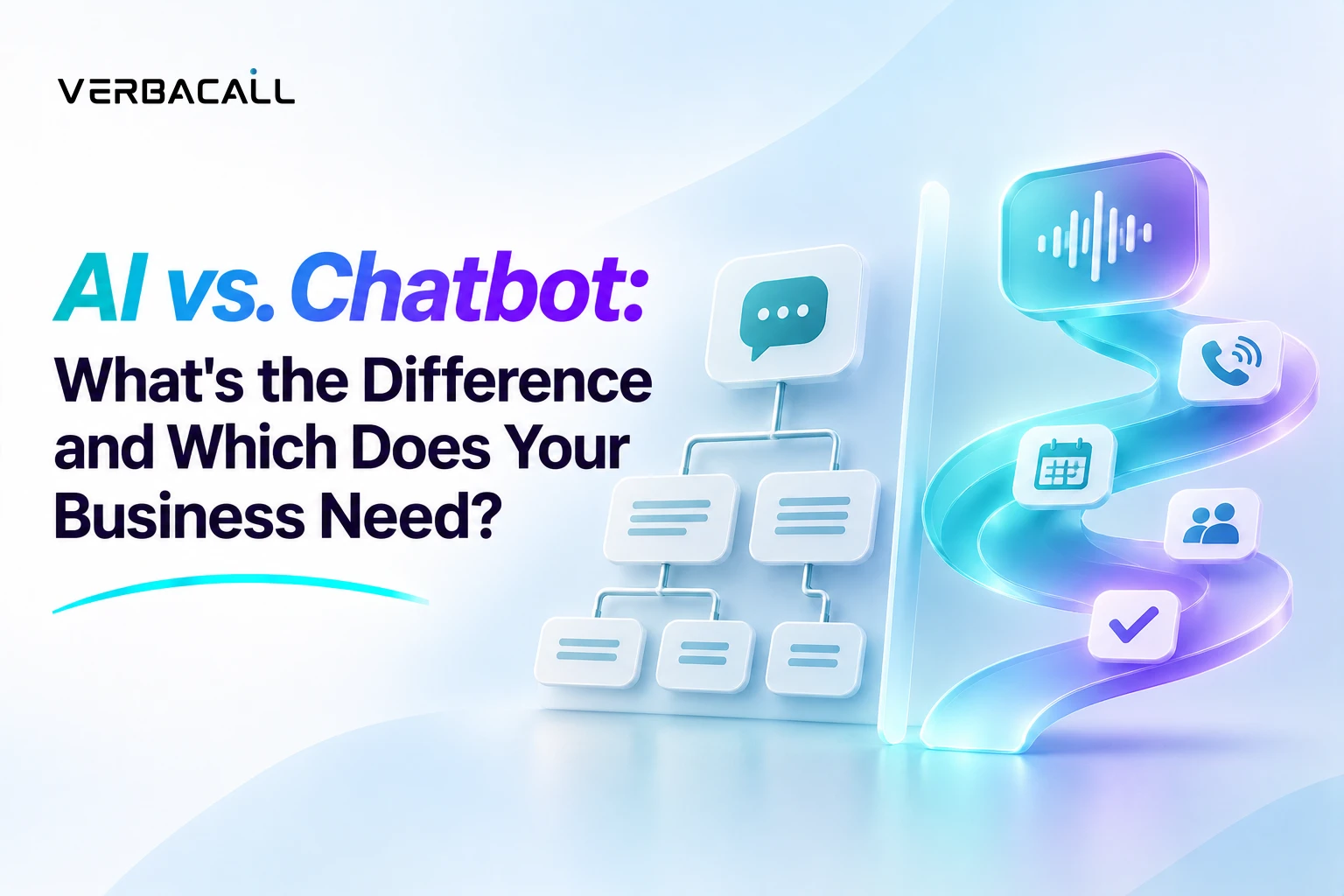
A traditional chatbot follows a set of rules. It gives customers answers that your business has already written.
Conversational AI can understand questions in different ways, hold a back-and-forth conversation, and help customers take the next step.
Here’s a quick comparison:
| Feature | Traditional Chatbot | Conversational AI |
| Answers questions | Uses saved replies | Understands questions and creates replies |
| Handles conversations | Follows set steps | Adapts to the conversation |
| Personalizes responses | Uses basic customer details | Uses context and connected customer data |
| Qualifies leads | Asks fixed questions | Asks follow-up questions |
| Books appointments | Uses preset booking steps | Can book through connected calendars |
| Setup | Usually simpler | May need more setup and testing |
The big difference? Traditional chatbots follow a script. Conversational AI can work with a customer’s natural way of speaking.
According to ++IBM++, modern AI chatbots use language technology to understand what customers mean, rather than simply matching words to saved answers.
What Can a Traditional Chatbot Do for Your Business?
Traditional chatbots are a good fit when customers ask the same questions every day.
For example, they can help with:
- Customer support: Answer questions about business hours, shipping, and return policies.
- Order tracking: Help customers check where their packages are.
- Website help: Direct visitors to the right pages.
- Basic lead collection: Ask for names, emails, and contact details.
These tools are often easier to set up and can handle routine tasks without taking up your team’s time.
For a small business with simple customer needs, that may be all the automation you need.
What Can Conversational AI Do Better?
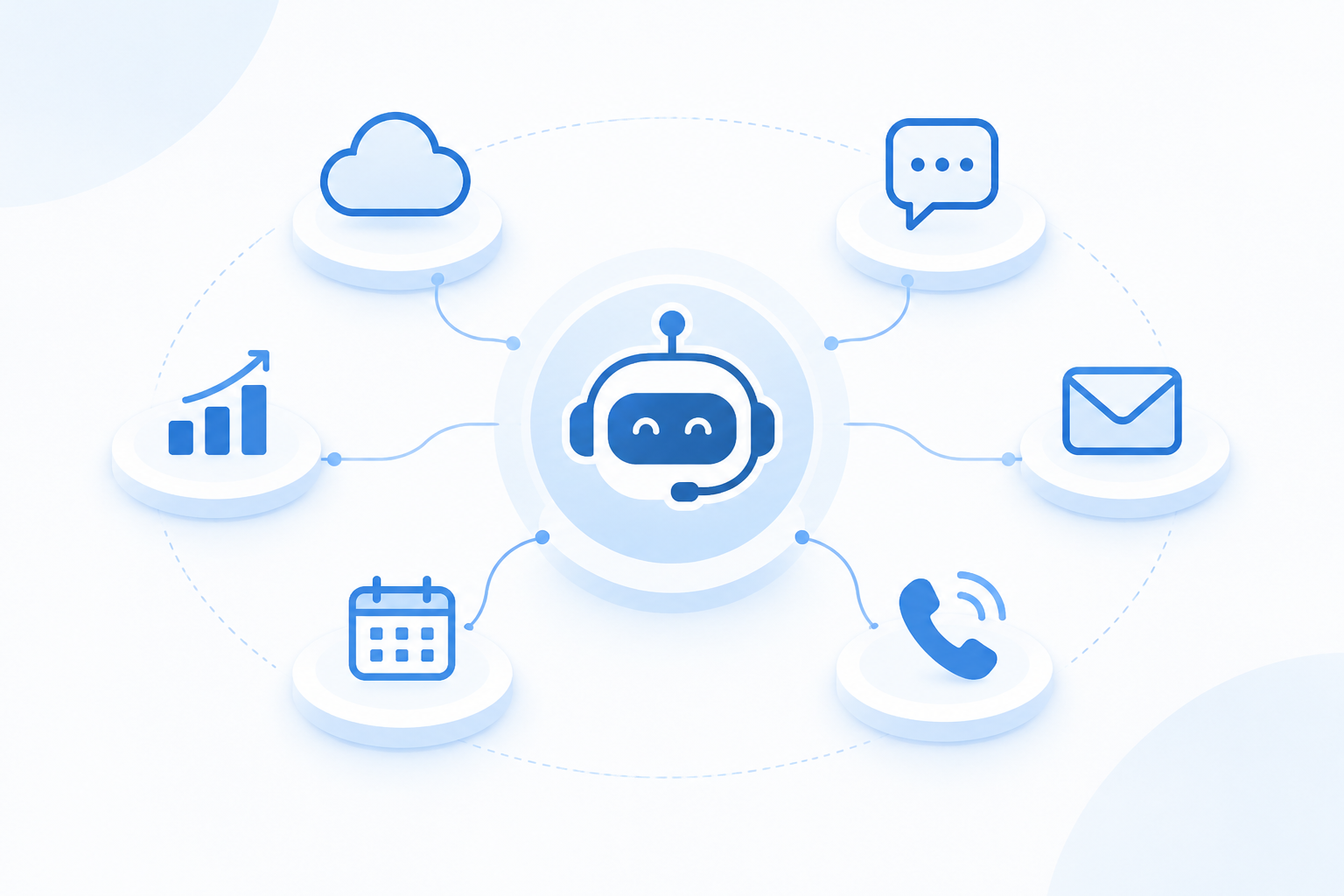
Conversational AI can help when customers have more than one question or need help taking action.
It can support:
- Natural conversations: Understand requests without forcing customers through menus.
- Lead qualification: Ask about budget, needs, and buying timelines.
- Appointment scheduling: Check connected calendars and arrange meetings.
- Personalized support: Use approved customer information to make replies more useful.
- Call handling: Answer incoming calls and connect customers with employees.
Some platforms also work over the phone.
For example, ++VerbaCall++ uses AI voice agents to answer business calls, gather lead information, schedule appointments, and transfer callers to team members.
This helps businesses manage more conversations without making employees handle every routine inquiry themselves.
Does AI Actually Improve Business Results?
Research offers some useful answers.
1. Klarna: Faster Customer Service
In February 2024, Klarna reported that its AI assistant handled 2.3 million customer conversations in its first month.
According to ++Klarna’s published results++, the company saw:
- Two-thirds of customer service chats are handled by AI.
- Resolution times reduced from 11 minutes to under 2 minutes.
- 25% fewer repeat inquiries.
These company-reported results show how AI can help large support teams manage customer requests more efficiently.
2. Research: Better Employee Productivity
A study published in The Quarterly Journal of Economics in 2025 examined generative AI assistance across more than 5,000 customer support employees.
Researchers found:
- 15% higher productivity, on average.
- Stronger improvements among newer and less experienced employees.
- More customer issues are resolved per hour.
The findings suggest that AI can help employees work faster while improving customer questions.
Which One Should Your Business Choose?
You don’t need the most advanced tool. You need the one that makes every day work easier.
Choose a traditional chatbot if you want to:
- Answer common website questions.
- Help customers find basic information.
- Collect contact details through simple forms.
- Keep setup and operating costs lower.
Choose conversational AI if you want to:
- Handle different types of customer questions.
- Qualify leads through natural conversations.
- Help customers book appointments.
- Connect customer interactions with business systems.
- Support more complex service and sales tasks.
What if most of your customers call instead of chat?
An AI voice agent may be a better fit.
For example, ++VerbaCall’s AI solutions for real estate++ help teams answer inquiries, gather buyer details, and arrange appointments through phone conversations.
The same approach can support businesses in senior living, home care, and other service industries where phone calls matter.
Make Your Decision Based on Results
Before choosing a tool, look at three things: how many questions your team handles, how often those questions repeat, and how much time employees spend answering them.
Then measure what changes after adding automation.
Useful numbers include:
- Customer questions resolved.
- Employee time saved.
- Qualified leads collected.
- Appointments booked.
- Customer satisfaction.
For businesses that depend on phone inquiries, ++VerbaCall++ offers conversational AI tools designed to support call handling, lead management, and customer follow-up.
The best choice isn’t always the smartest technology. It’s the one that helps your customers get answers and your business get more done.